


Are you worried about the careers available after Physics?
Are you interested to know more about careers in Physics?
Read this article to know more!
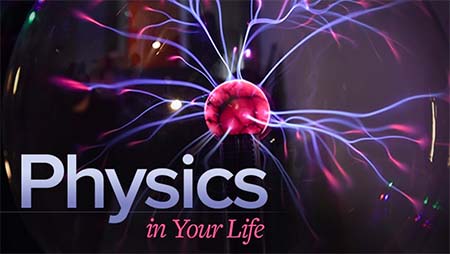
What is B.Sc Physics?
The B.Sc Physics is the natural science that involves the study of matter and its interaction with the atmosphere. The students of B.Sc Physics also study concepts such as energy and force. In the broader sense, the B.Sc Physics is the general analysis of nature, conducted to understand how the universe behaves.
The students who have the passion to study the behaviour of the matter can choose to join B.Sc Physics. The students who have completed their PUC or 10+2 with any of the two subjects of Physics, Chemistry, Mathematics, Computer Science, Electronics or statistics are eligible to apply for the course.
Career Scope for B.Sc Physics
The B.Sc Physics students are hired in different sectors in numerous areas. They are required in factories, production units, research labs, power plants, etc. The physics degree is the great starting point for a career in scientific research, as well as in a range of careers in the businesses, IT sector, finance sector and even in engineering sectors.
Some of the job roles available after B.Sc Physics students are:
Academic Researcher
The academic researchers will apply their expertise and skills developed through study and research. The main role of the academic researchers is to publish papers of the works related to physics with a consultation with the peer-reviewers. They are also required to carry out original and high-level individual and collaborative research with other team members. They are required to organise the time and budget effectively, including for off-site and overseas visits. They are required to analyse the large sets of data and information drawing relevant conclusions. They are also required to prepare and deliver presentations at various global summits of physics. They are also required to write high-quality papers for peer-reviewed journals and international conference proceedings. They are also required to undertake a thorough and comprehensive literature review of the texts related to physics. They are also responsible to develop plans for future research objectives and proposals.
Acoustic Consultants
The acoustic consultants provide acoustics, noise and vibrations services such as noise surveys, noise assessments, acoustic design activities advice and building acoustics. The acoustic consultants are required to help the mobile phone developers to manipulate the sound through digital signals. They also advise on the design of concert halls in the buildings or usage of ultrasound in the field of seismology. They are also required to undertake the noise assessments in the buildings to make sure that they meet the building regulations. They are required to perform complete acoustic modelling with knowledge of designing the buildings according to the acoustic requirements such that they do not affect the sound levels. They are also required to design the research equipment like ultrasound, sonar etc. They are also seen working in the recording studios. They are also required in the development of modelling softwares which could include ODEON, SoundPlan INSUL, CadnA and CATT.
Astronomer
The astronomers are the scientists who study the universe, its objects and how it works. They aim to push the boundaries of human knowledge about how the universe works by observation and theoretical model. The astronomers use the knowledge of physics and mathematics to study astronomy. They are required to collect and analyse data from the cameras, satellites and other observations. They are required to collaborate with other astronomers for latest updates and research. They work in different roles such as planetary geologists, astrobiologists, cosmologists and telescope design engineers. They are required to share the knowledge and developing programmes that are related to astrophysics and many other discoveries related to other astronomical bodies.
Geophysicist
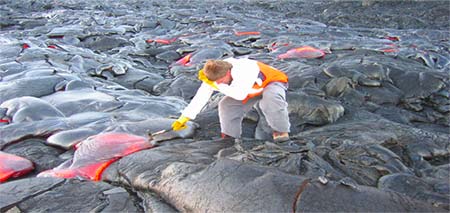
The geophysicists will be studying the physical aspects of the earth by using a range of methods including gravity, magnetic electrical and seismic. The geophysicists play a crucial role in the oil and natural gas industries. They help in providing a clear picture of what’s below the earth’s surface. They are also required to collect the seismic data generated from seismic waves. They are required to design data acquisition plans. They are also required to decide suitable seismic measurement and data processing techniques. They are required to take the equipment out to various locations around the world and deploy seismometers. They are required to monitor the reaction of recording equipment to detect irregularities. They are also required to map 2D and 3D seismic data. They are also required to report the collected data to the team, clients, senior managers or partners at meetings and presentations. They are also required to measure the reservoir volumes and assess the feasibility of dams. They are also responsible to assess the potential of oil and natural gas in the locations. They are also required to provide a range of geophysical support and technical advice and guidance. They are also necessary to improve the existing techniques and come up with new techniques in data acquisition and mathematical processing as they also seek to develop new technologies and methodologies.
Metallurgist
The metallurgists are concerned with the extraction and processing of various metals and alloys. The metallurgists are required to investigate and examine the performance of metals such as iron, steel, aluminium, nickel and copper and use them to produce a range of useful products and materials with certain properties. They are required to design and control processes to separate metals from ore. They are also responsible to monitor and test for corrosion. They are required to develop ways to improve metals by making them stronger and more adaptable. They are required to test the metals and ensure that they meet the quality standards and safety standards. They are also required to assess the physical structure and behaviour of the metals. They are also required to investigate accidents where it is suspected that the cause may be related to metallurgical failure such as air crashes. They are also required to control the shaping of the metals through casting, rolling, forging and drawing. They are also required to interpret and understand the design drawings and make recommendations. They are also responsible to monitor the quality standards in manufacturing and finishing. They are even responsible for carrying out the structural analysis using sophisticated computer softwares using mathematical models.
Nanotechnologists
The nanotechnologists are required to manipulate the matter on the nanoscale for developing new materials and equipment as well as drugs and diagnostic tools. Nanotechnology encompasses science, physics, chemistry, biology, engineering and computer science. They are required to design and conduct experiments based around observing nanoscale systems in their given field. They are also required to perform computational research using simulated nanoscale experiments and systems to increase the theoretical knowledge and aid in the design and development of practical experiments. They are required to plan and conduct experiments to investigate and analyse nano-scale systems. They are required to operate or design and construct complex instrumentation. They are required to extrapolate data to develop theories to explain experimental results. They are also required to write up results in reports and scientific papers. They are also required to arrange the testing of the products or materials. They are also required to collaborate and share knowledge with other scientists about the nanotechnological discoveries and reports. They are also required to disseminate new findings at departmental, institutional or national meetings and conferences that are related to nanotechnological innovations and discoveries.
Radiation Protection Practitioner
The radiation protection practitioner uses the scientific techniques and equipment to measure and monitor radiation, assess the risks and ensure the safety of the workplace. They are required to give advice and awareness about the possible hazards of ionising radiation such as X-Rays, as well as radioactive materials and waste. They are responsible to ensure that the radiation safety regulations are observed. They are required to draw up and implement radiation protection policies and procedures. They are also required to monitor and maintain records of radiological and environmental conditions. They are required to develop and review radiation protection systems, inspect their operations. They are required to provide dosimetry service and measure radiation using both basic and complex scientific equipment. They are required to assess the radiation risks in the workplace and advice on the design of the plant equipment and waste disposal methods. They are also required to prepare emergency plans and disaster management procedures along with contingency plans in case of radiation leakage in the radiation incidents.
Placement Opportunities
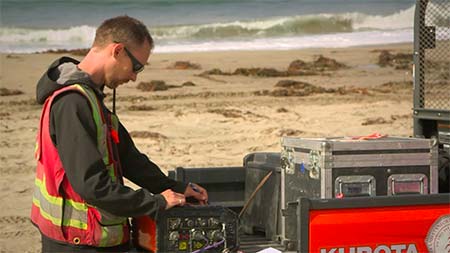
B.Sc Physics students can find ample job opportunities across different sectors. They are hired in IT companies, production units, power plants, radiology labs, research institutes, meteorological agencies, disaster management agencies, oil and natural gas companies etc.
Some of the top recruiters hiring B.Sc Physics students are:
- Analog Devices
- GE Digital
- Atomic Labs
- Tesla
- Solar Industries India Ltd
- NASA
- ISRO
- Intel
- Schneider Electric
- Kirloskar Electronics
- Bajaj Electricals
- LG
- Samsung Industries
- Nuclear Power plants
- Suzlon
- GE Electric
- Tata Power
Conclusion
There is a lot of demand for the B.Sc Physics students and they are required in almost all the sectors. There is no limit for the fields for the B.Sc Physics. Take any field, we require B.Sc Physics students. They are required in the medical field, engineering field, manufacturing firm, production units etc. The students with passion towards matter and energy can choose to join B.Sc Physics course to earn a handsome salary and also experience better career growth.